Engineering Services
Engineer What Others Only Imagine.
Engineered For Performance. Designed For The Experience.
Complex aquatic environments require more than conventional engineering. They require engineering designed around the experience.
They require a deeper understanding of structure, hydraulics, water movement, mechanical systems, filtration, treatment, controls, equipment, and how every system performs together.
White Water Pools brings engineering into the project early—helping transform ambitious aquatic concepts into coordinated, buildable systems.
Engineering The Experience
What You See Is the Experience. What Makes It Possible Is the Engineering.
An extraordinary aquatic environment may appear effortless. Behind that experience is a highly coordinated network of structural, hydraulic, mechanical, electrical, water-treatment, automation, drainage, and equipment systems.
White Water engineers these systems as one integrated environment—designed around the architecture, the experience, the performance requirements, and the realities of long-term operation.
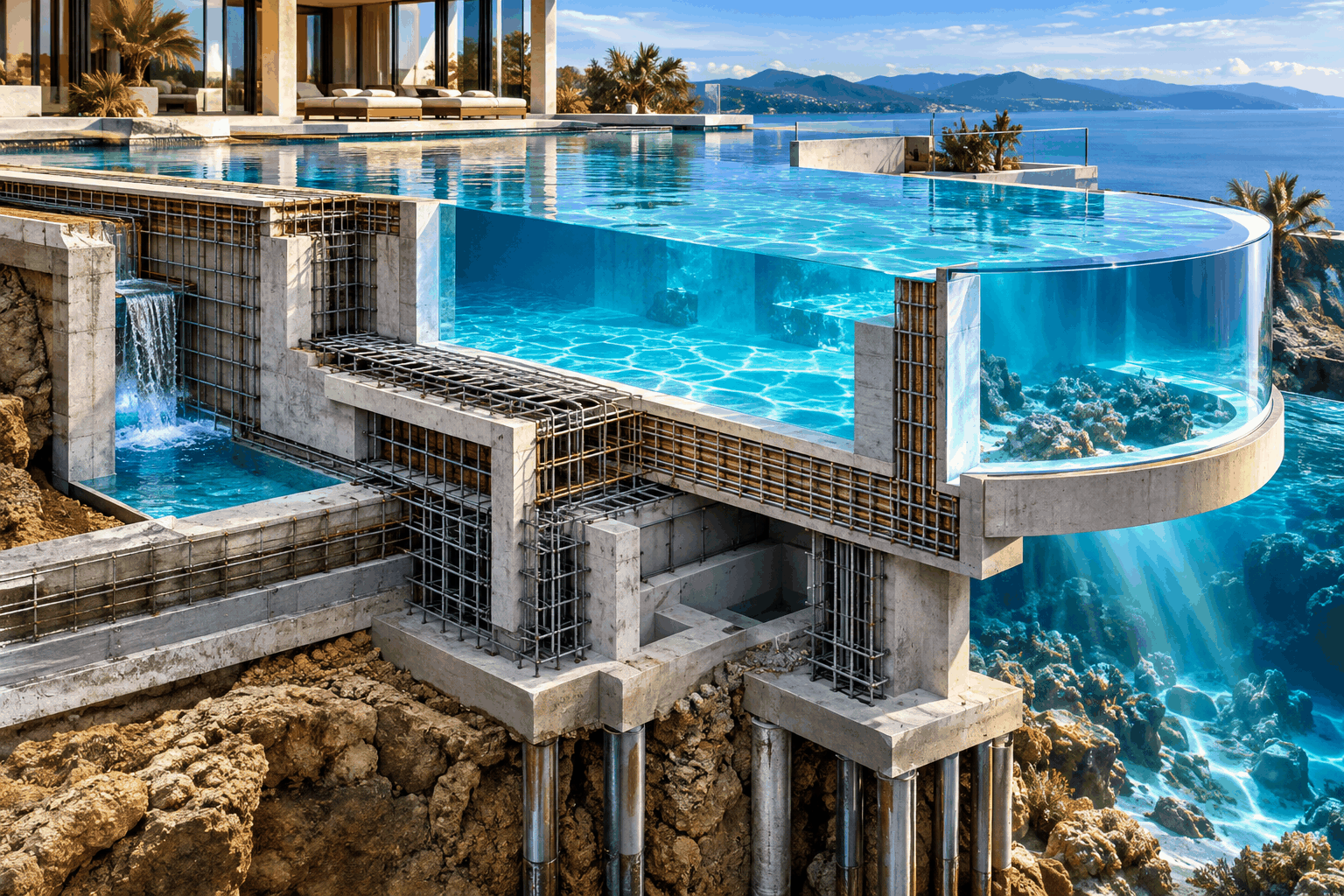
Structural Engineering
The foundation of everything above and below the water.
Structural systems are developed for pool shells, retaining walls, elevated structures, foundations, specialty features, acrylic elements, complex geometries, and other aquatic components—with structural requirements integrated into the design from the beginning.
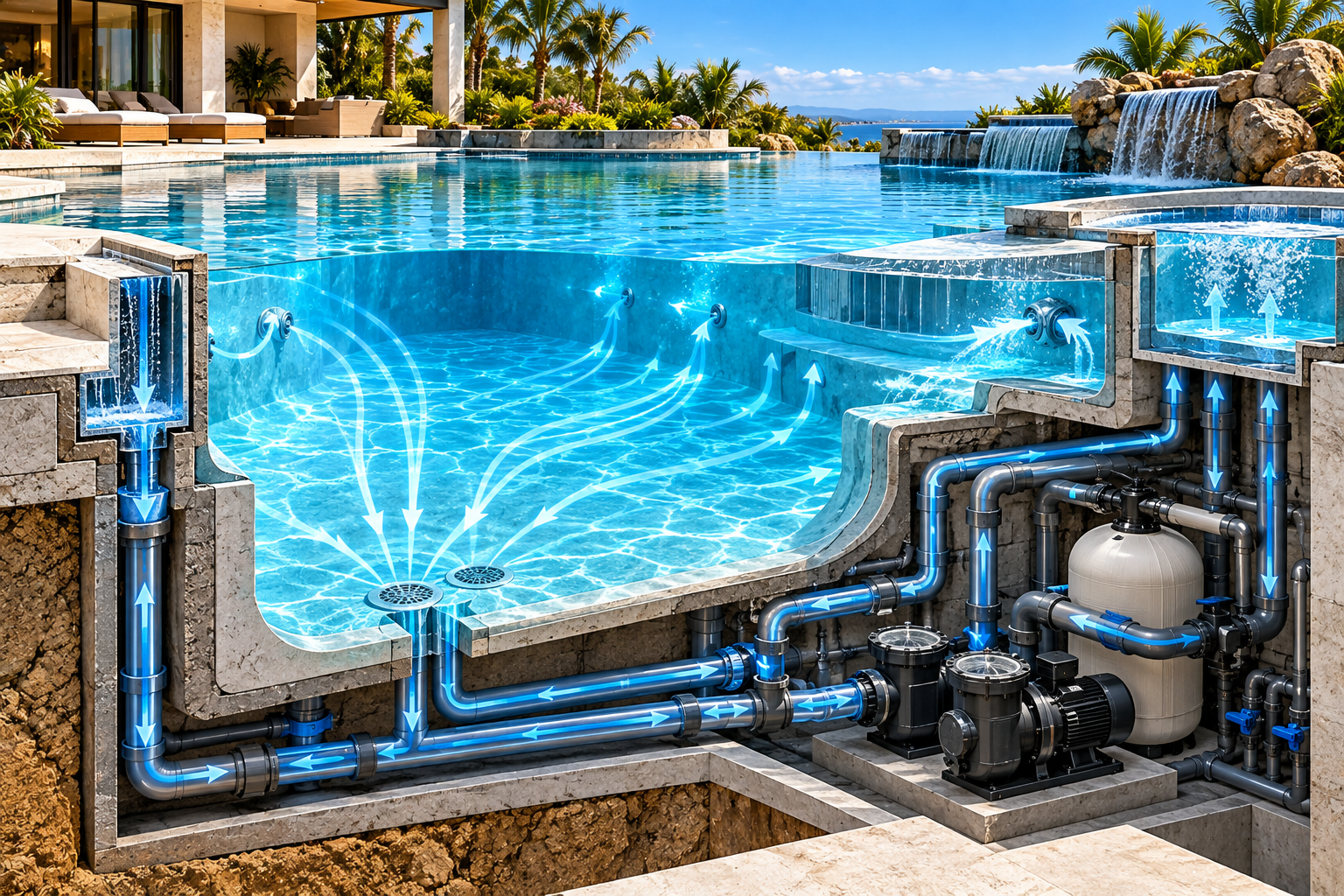
Hydraulic Engineering
The science behind how the water moves.
We develop circulation, suction, return, overflow, filtration, flow rates, hydraulic balancing, pump requirements, and water movement systems around the specific geometry and performance requirements of each environment.
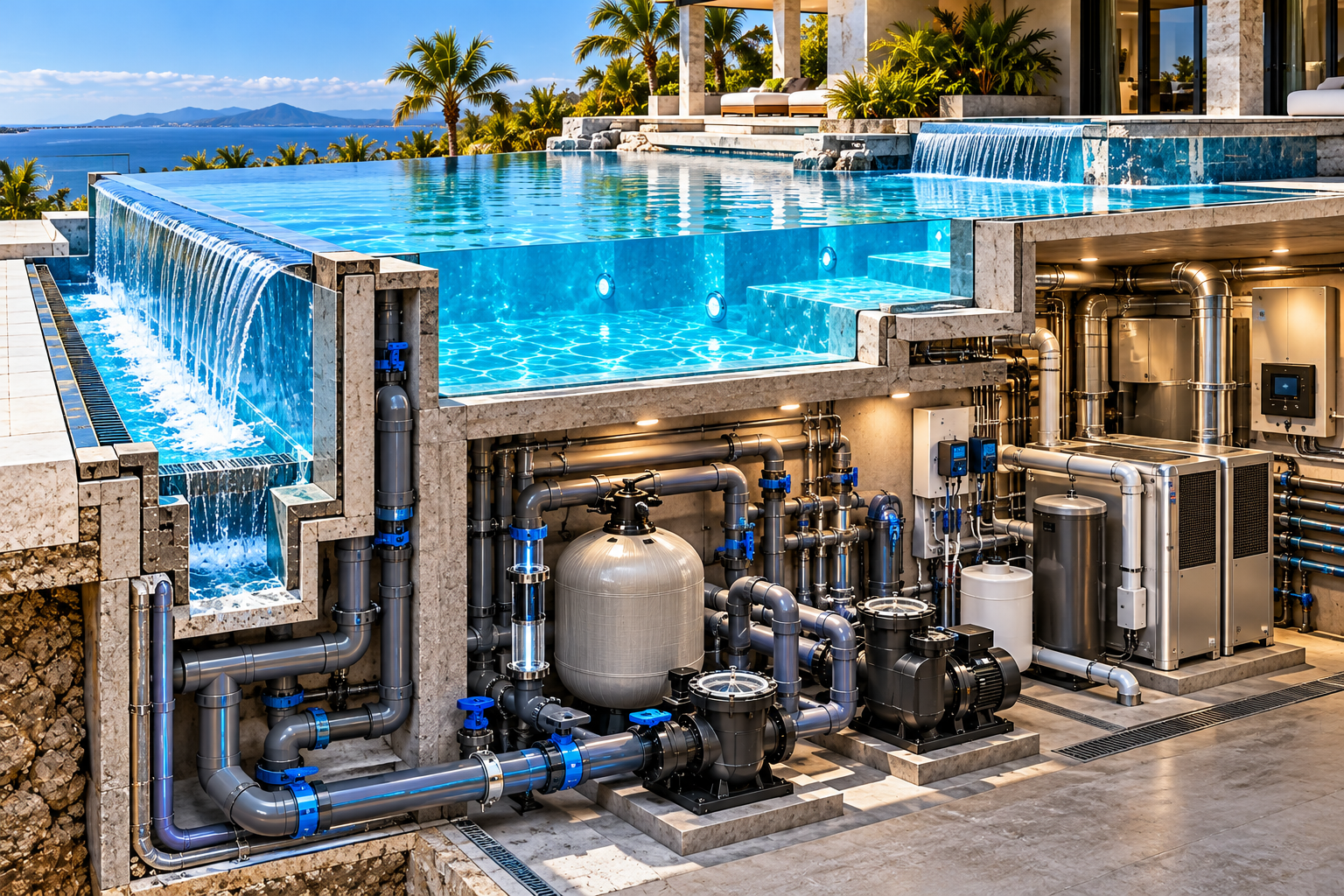
Mechanical & Water Systems
The infrastructure behind clean, comfortable, high-performing water.
We coordinate pumps, filtration, heating, water treatment, circulation equipment, mechanical rooms, ventilation, drainage, and related infrastructure to create systems that perform efficiently and remain serviceable over time.
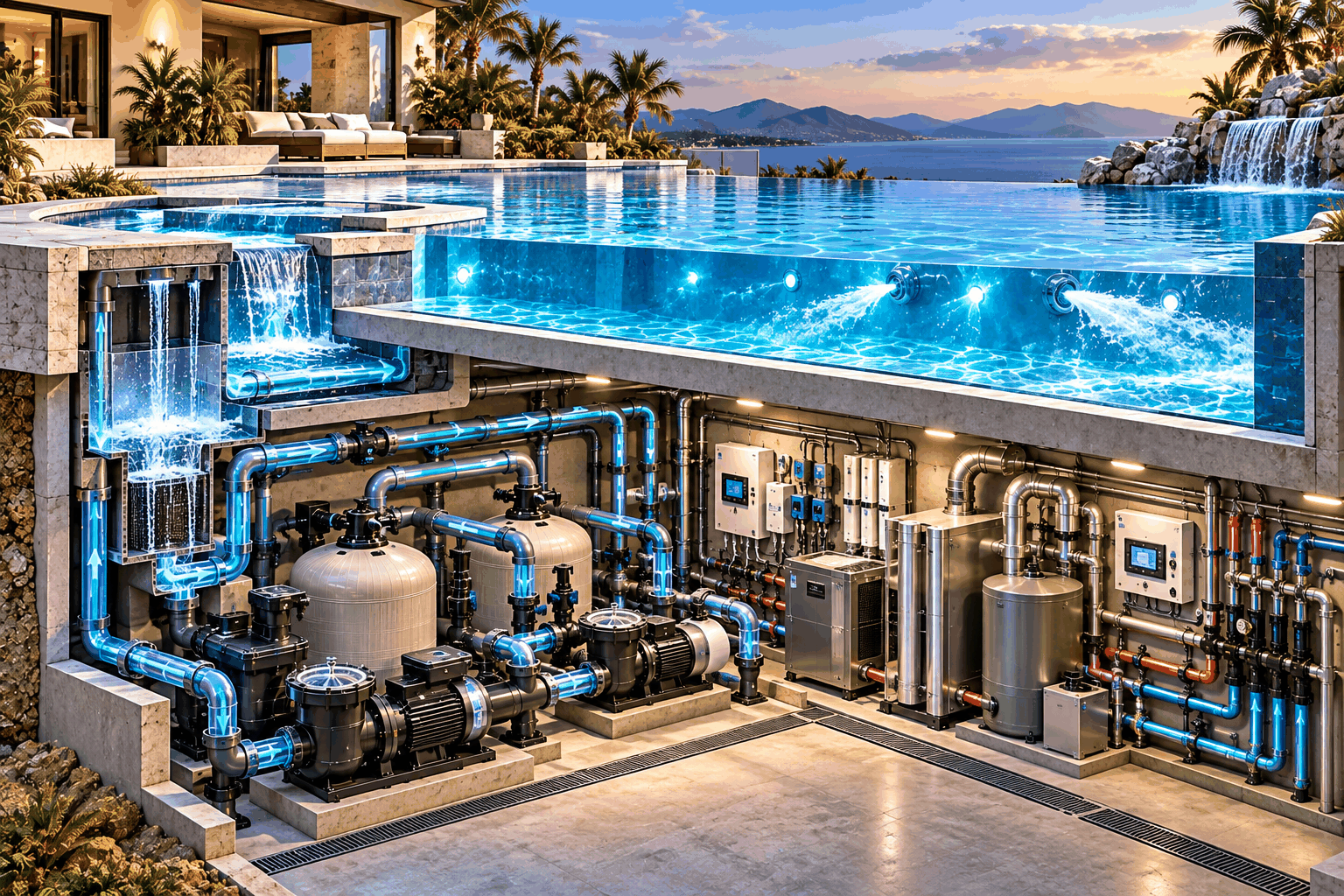
Electrical, Automation & Controls
The intelligence and control behind the experience.
Electrical requirements, automation, controls, lighting, sensors, equipment interfaces, and integrated system communication are coordinated as part of the overall aquatic environment—not added after the design is complete.
Specialty Engineering: When ordinary solutions aren't enough.
Complex aquatic environments can require unusual geometry, specialty materials, elevated or suspended structures, acrylic elements, advanced water features, unique hydraulic conditions, or highly coordinated technical solutions.
We approach these challenges by engineering the solution around the project—not forcing the project into a predetermined system.
One Environment. One Engineered System.
The objective isn't to engineer a collection of individual components. It is to make every system, connection, interface, and detail work together as one.
Structure supports the vision.
Hydraulics move the water.
Mechanical systems maintain it.
Electrical systems power it.
Automation orchestrates it.
Engineered For Performance. Designed For The Experience.
Engineering the Vision into the Reality.
Exceptional aquatic environments are complex systems disguised as simple experiences.
Behind the water are structural systems, hydraulics, circulation, filtration, water treatment, mechanical equipment, electrical infrastructure, automation, drainage, controls, access, and countless points of coordination.
Our engineering process brings those elements together around one objective:
Make the vision perform exactly as intended.
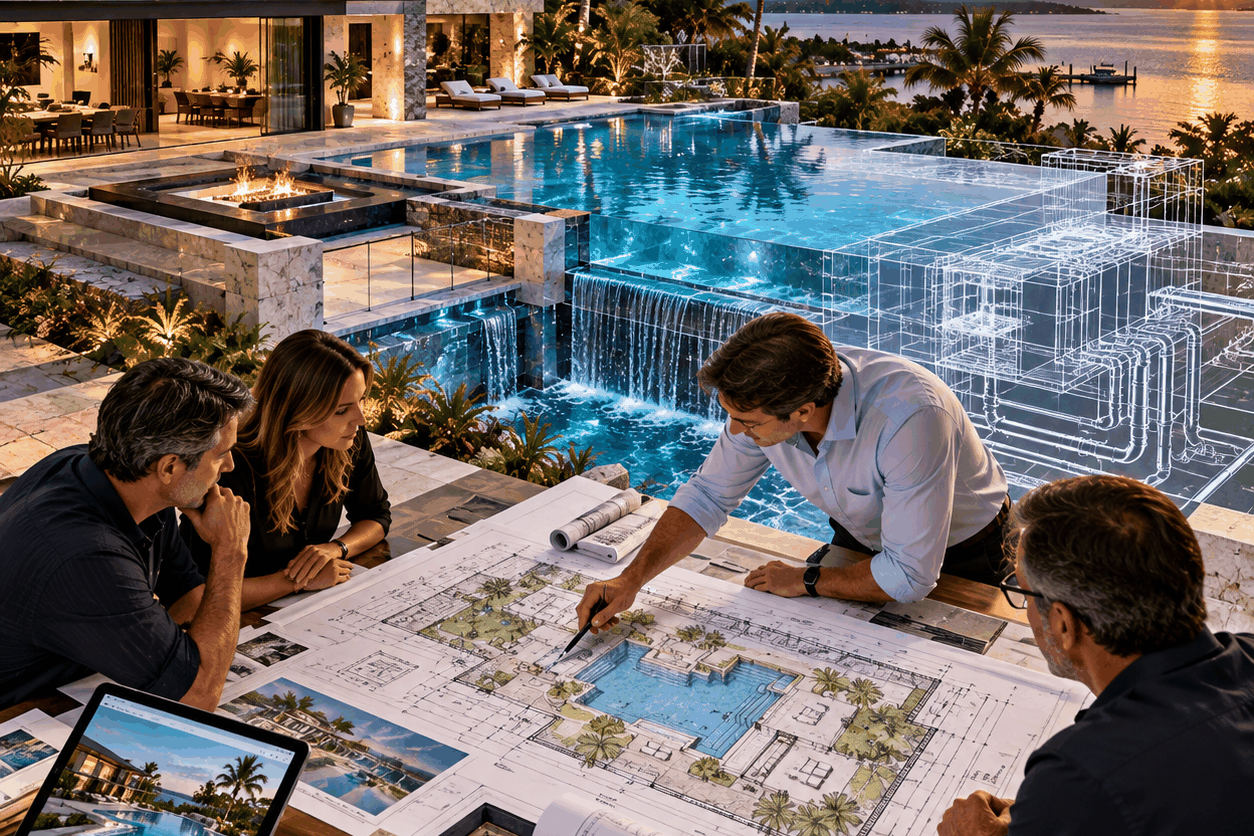
Understand the Project Before Engineering the Solution.
We begin by understanding the complete environment—not simply the aquatic component.
We evaluate design intent, architectural documents, site conditions, project requirements, operational objectives, performance expectations, and long-term considerations to establish the engineering priorities for the project.
First, we understand what the project needs to accomplish.
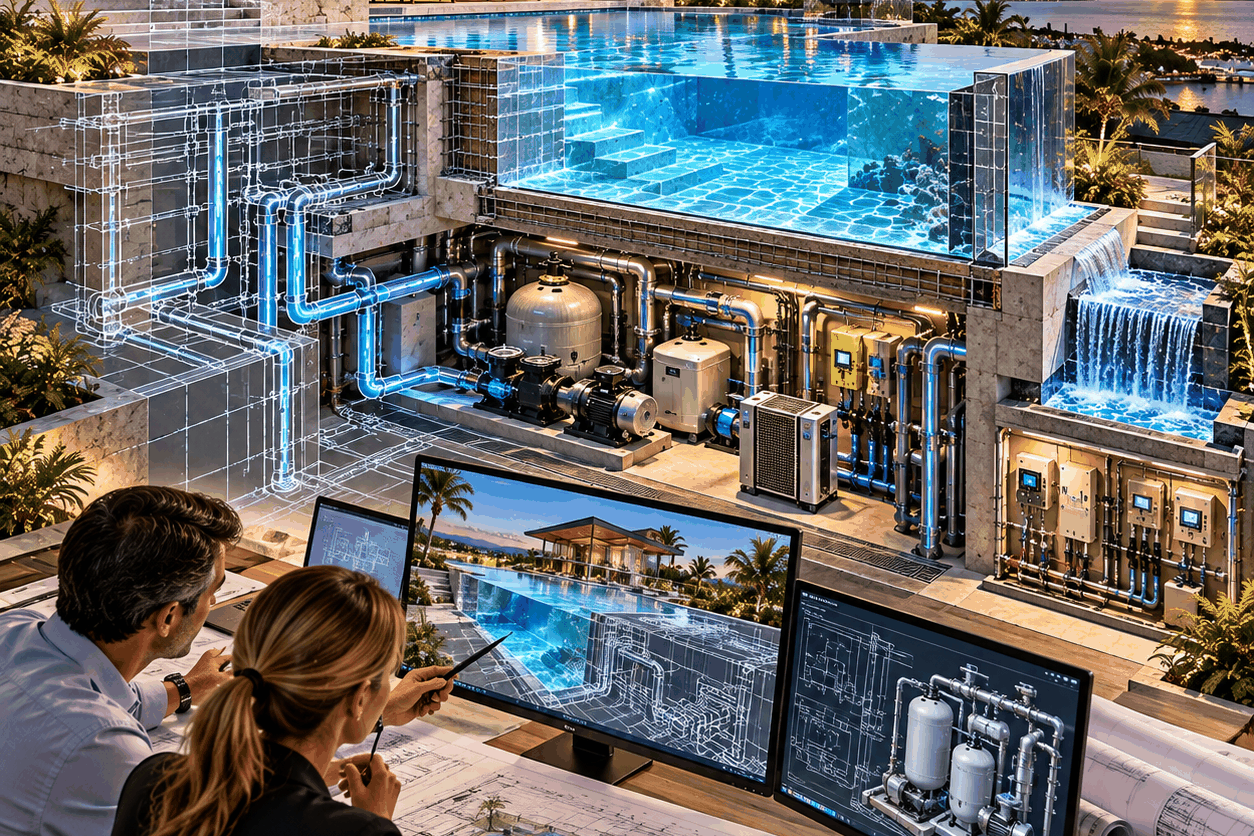
Engineer the Systems Around the Design.
Structural, hydraulic, mechanical, electrical, water-treatment, equipment, automation, drainage, and specialty systems are developed specifically for the project.
Rather than forcing a predetermined system into the design, we develop the infrastructure around the architecture, environment, performance requirements, and intended experience.
The systems are designed to serve the vision—not compromise it.
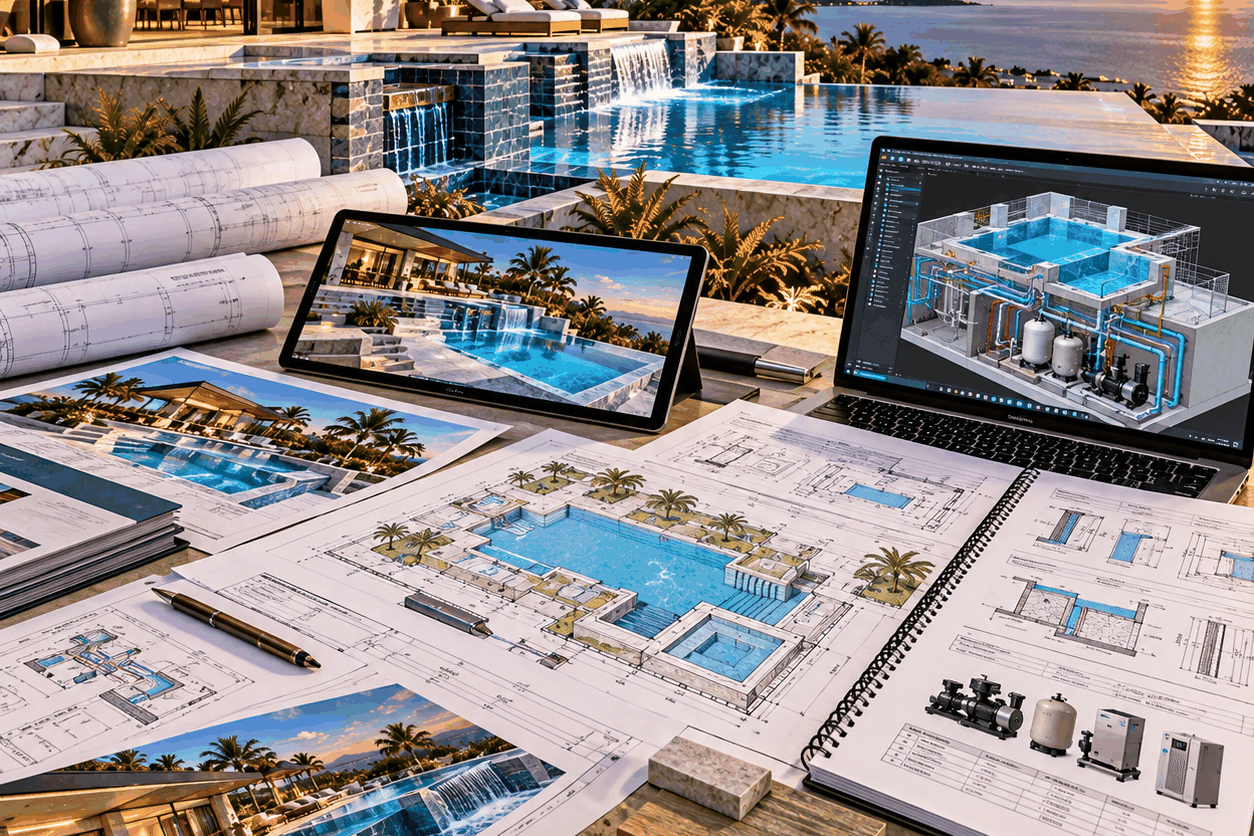
Turn Engineering Into a Buildable Plan.
The engineering is translated into detailed, coordinated documentation appropriate to the project.
Depending on scope, this may include construction documents, engineering calculations, coordinated drawings, equipment requirements, technical specifications, details, schedules, and system documentation.
Every detail has a purpose:
Make the design understandable, coordinated, and ready for execution.
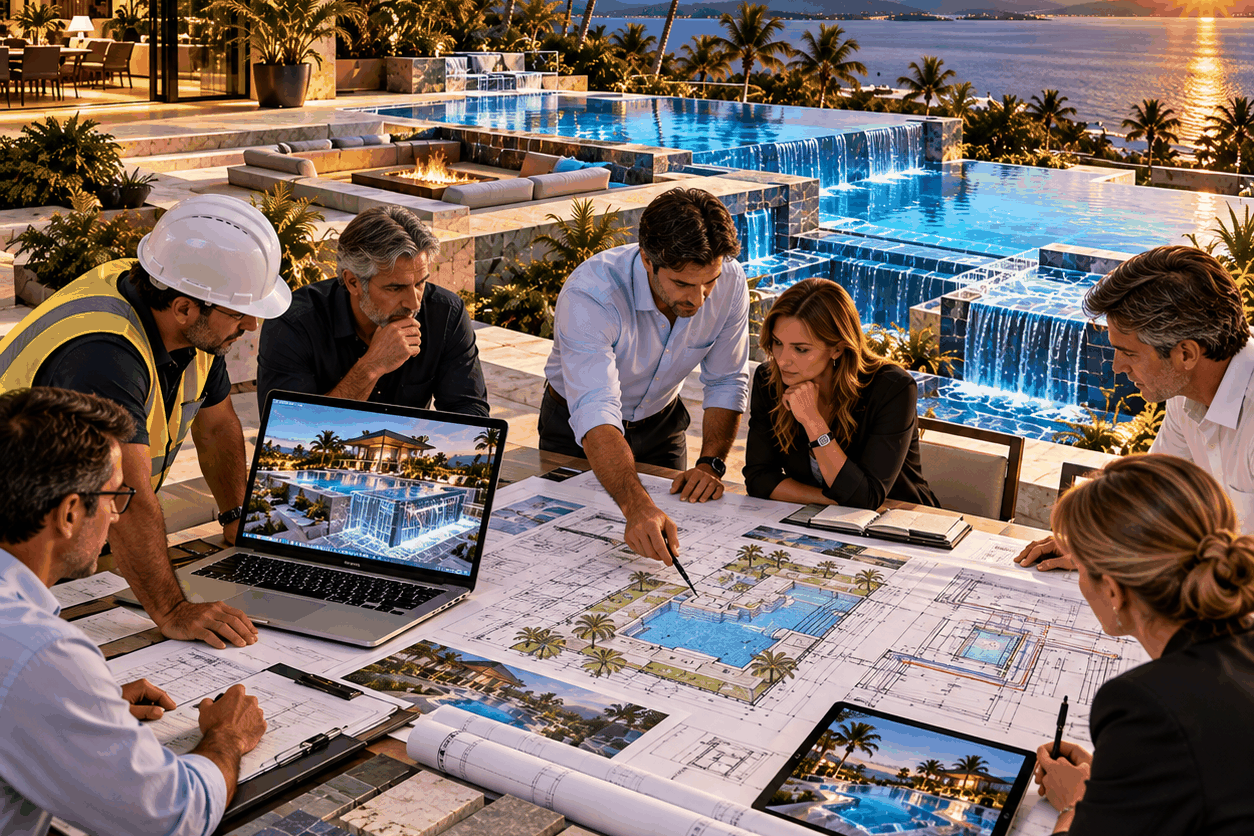
Make Every Discipline Work Together.
Complex aquatic environments don't exist in isolation.
We coordinate with architects, landscape architects, engineers, contractors, trades, manufacturers, equipment specialists, developers, owners, and other project stakeholders to resolve interfaces before they become problems in the field.
Better coordination creates fewer conflicts, fewer compromises, and greater control.
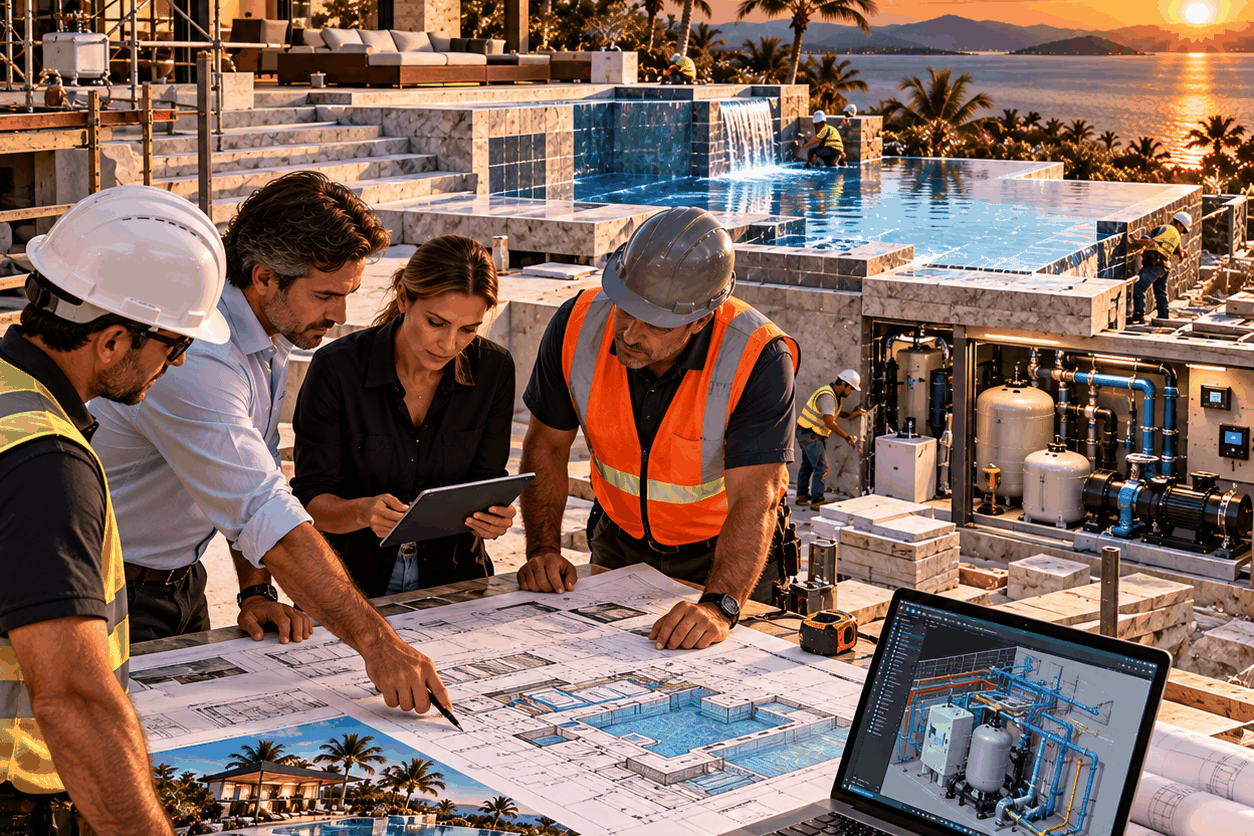
Engineering Doesn't Stop When Construction Begins.
The transition from drawings to reality is where many projects encounter their greatest challenges.
White Water remains available to address submittals, RFIs, field conditions, equipment questions, coordination issues, design clarifications, and technical challenges as construction progresses.
Because the objective isn't simply to complete the engineering.
It's to see the engineered vision become reality.
Engineered for the result.
Every System. Every Connection. Every Detail.
From the first project review through construction support, our engineering process keeps design intent, system performance, constructability, and long-term operation connected.
Designed with purpose. Engineered with precision. Built to perform.
Engineering That Supports Construction
Engineering doesn't end when the drawings are complete. What is designed must ultimately be built, installed, coordinated, commissioned, operated, and maintained.
We consider field conditions, constructability, installation requirements, equipment access, system coordination, sequencing, serviceability, material transitions, tolerances, and long-term operation while the project is still being designed.
The result is engineering that does more than document the vision.
It helps protect the vision as it becomes reality.
From Drawings
To Reality
Design Intent. Preserve the architectural and experiential vision.
Constructability. Develop solutions that can be efficiently and precisely built.
Coordination. Resolve interfaces between structure, systems, equipment, trades, and surrounding construction.
Access & Maintenance. Think beyond installation to the people who will operate and service the environment for years to come.
Field Reality. Anticipate the conditions and challenges that exist beyond the drawing set.
Fewer Conflicts. Better Coordination. Greater Control.
Because exceptional engineering isn't measured by what looks good on paper.
It's measured by what performs in the real world.
Your Partner for Extraordinary Aquatic Environments.
Design-Driven Water. Engineered for Performance. Built Without Compromise.
