Advanced Filtration Systems
Exceptional Water Starts With What You Remove From It.
Behind every extraordinary aquatic environment is something you should barely notice
The filtration system continuously removing what doesn't belong there.
White Water engineers complete filtration systems around the volume, circulation, usage, bather load, environmental conditions, desired water quality, operating requirements, maintenance demands, and lifecycle of each aquatic environment.
From a private residential pool to a destination-scale lagoon, filtration isn't selected after the water has been designed.
It is engineered as part of the water from the beginning.
The Systems Behind Exceptional Water
Every aquatic environment introduces contaminants differently—and every filtration technology removes them differently.
White Water evaluates filtration media, capacity, loading, flow, turnover, pressure, maintenance, water consumption, equipment space, operating requirements, and treatment strategy to develop a filtration system appropriate for the environment.
Not simply a filter. A purpose-engineered filtration strategy.
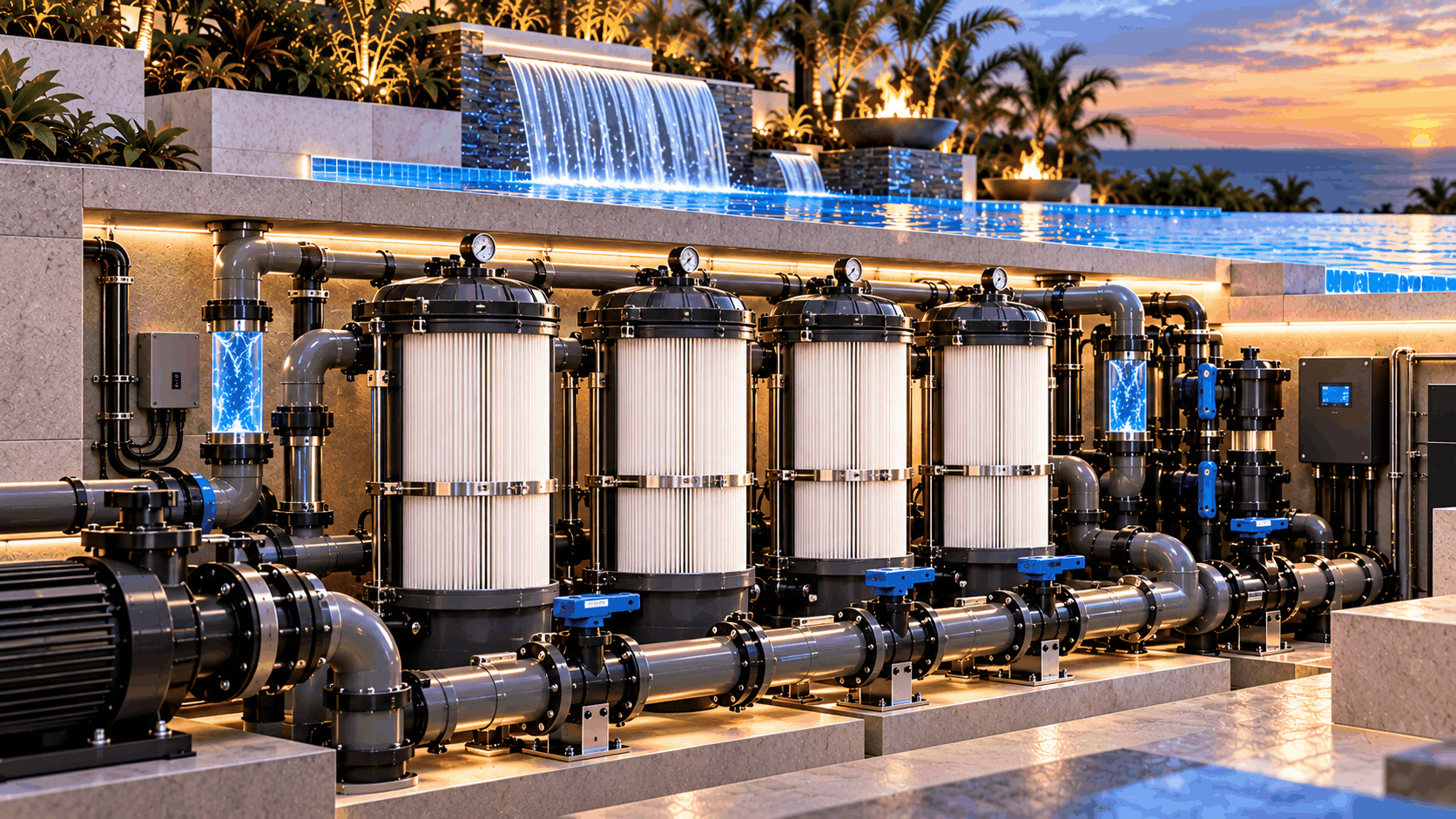
Cartridge Filtration
Exceptional Clarity. Simplified Operation.
Cartridge filtration provides high-capacity mechanical filtration without the routine backwashing associated with traditional media systems.
White Water engineers cartridge systems around required flow, filtration capacity, hydraulic performance, service intervals, equipment access, and the specific demands of the aquatic environment.
Efficient filtration without unnecessary complexity.
High-Capacity Cartridge Filters — Large-format filtration systems engineered around the required flow and filtration demands of the environment.
Multi-Element Systems — Multiple-cartridge configurations providing increased filtration surface area and contaminant-holding capacity.
Variable-Flow Integration — Filtration coordinated with variable-speed pumping to maintain effective performance across changing operating conditions.
Service & Maintenance Access — Equipment layouts designed around practical cartridge removal, cleaning, inspection, and replacement.
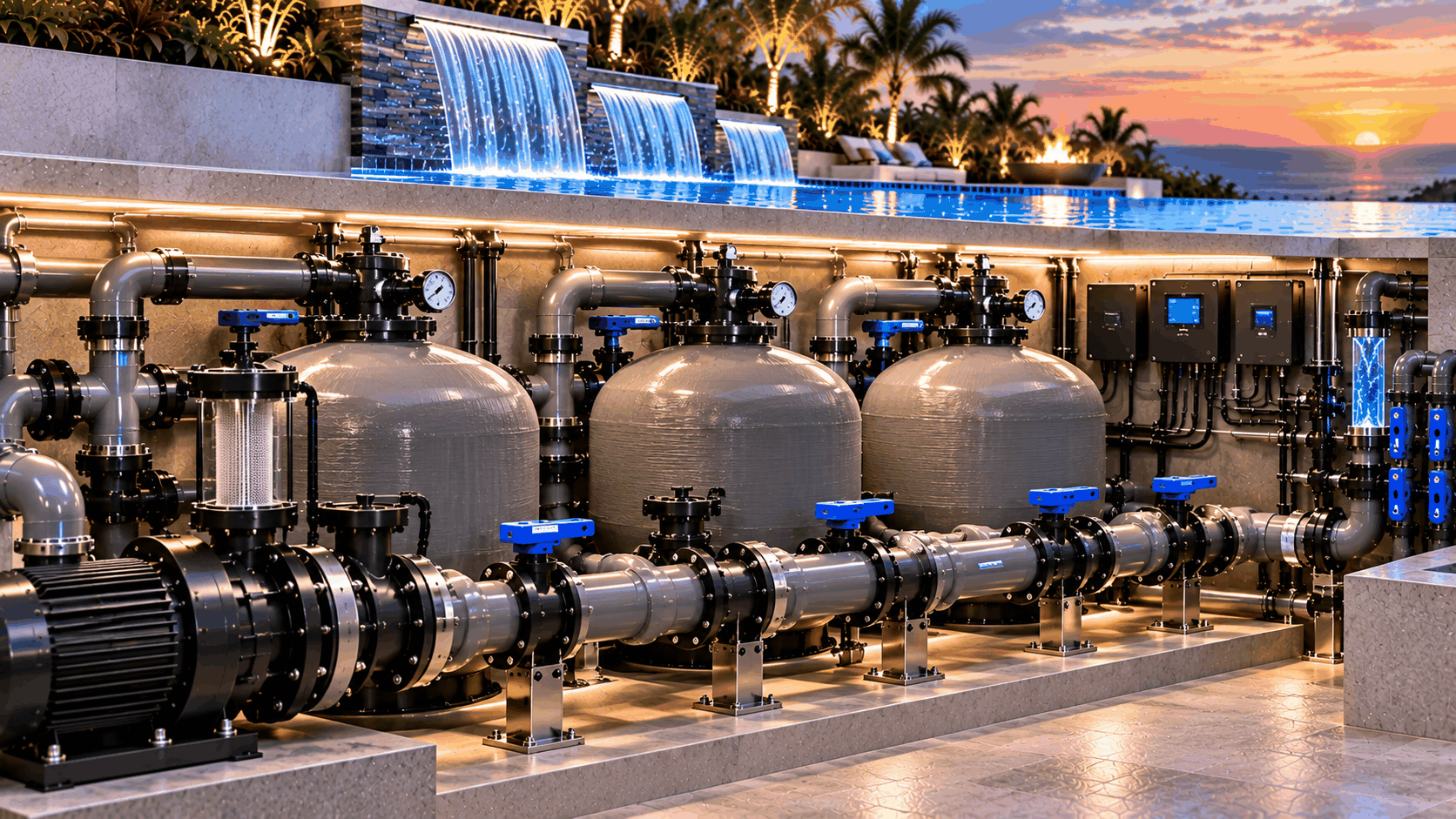
Media Filtration
Proven Filtration. Engineered for the Application.
Media filtration moves water through a purpose-selected filtration bed designed to capture suspended contaminants before returning filtered water to the aquatic environment.
But vessel size, media selection, filtration rate, hydraulic loading, backwash requirements, and operating conditions all affect performance.
White Water engineers media filtration around the complete system—not simply the diameter of the filter.
The media matters. How the system moves water through it matters more.
Sand Filtration — Traditional media filtration engineered around appropriate filtration rates, vessel sizing, flow, and backwash requirements.
High-Rate Media Filtration — Commercial and high-capacity systems designed for demanding flow and operating conditions.
Alternative Filtration Media — Specialized media may be evaluated where different filtration characteristics, operational objectives, or water-quality requirements justify their use.
Multi-Vessel Systems — Multiple filters engineered in parallel to provide required capacity, operational flexibility, serviceability, or redundancy.
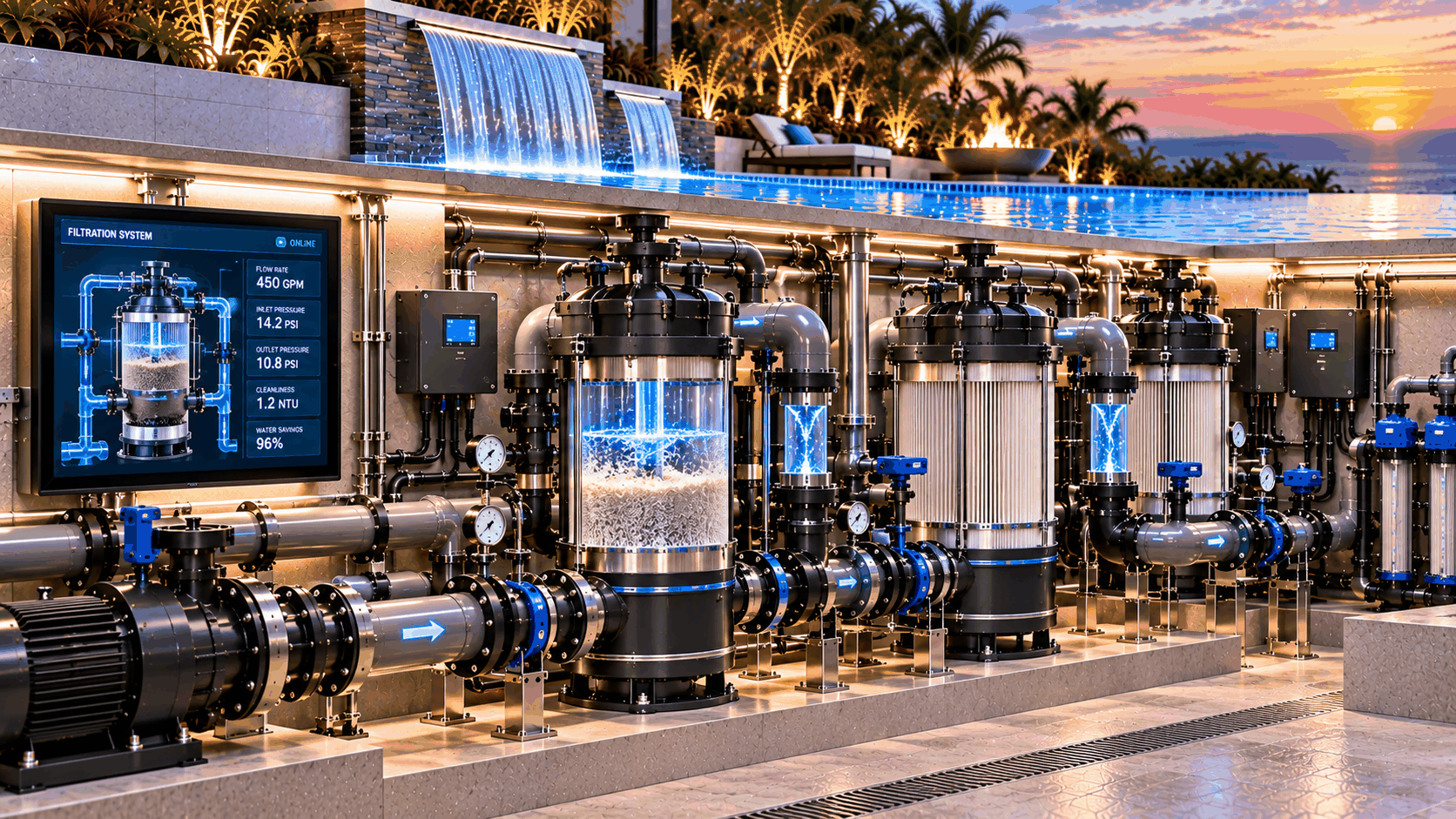
Regenerative & High-Efficiency Filtration
Greater Filtration Efficiency. Reduced Water Loss.
Certain commercial and high-demand aquatic environments benefit from filtration technologies engineered to capture extremely fine suspended material while reducing the water traditionally consumed through backwashing.
White Water evaluates regenerative and other high-efficiency filtration technologies where their performance, operating requirements, footprint, water conservation, and lifecycle economics align with the project.
Advanced filtration should solve an operational problem—not simply add technology.
Regenerative Media Filtration — High-efficiency filtration systems designed to achieve fine particulate removal while significantly reducing conventional backwash requirements.
Precoat Filtration Systems — Specialized filtration approaches utilizing engineered media layers to achieve high levels of particulate removal.
Water-Conservation Strategies — Filtration technologies and operating strategies evaluated to reduce unnecessary filter-related water consumption.
Commercial Integration — Systems coordinated with flow monitoring, treatment controls, automation, mechanical infrastructure, and facility operating requirements.
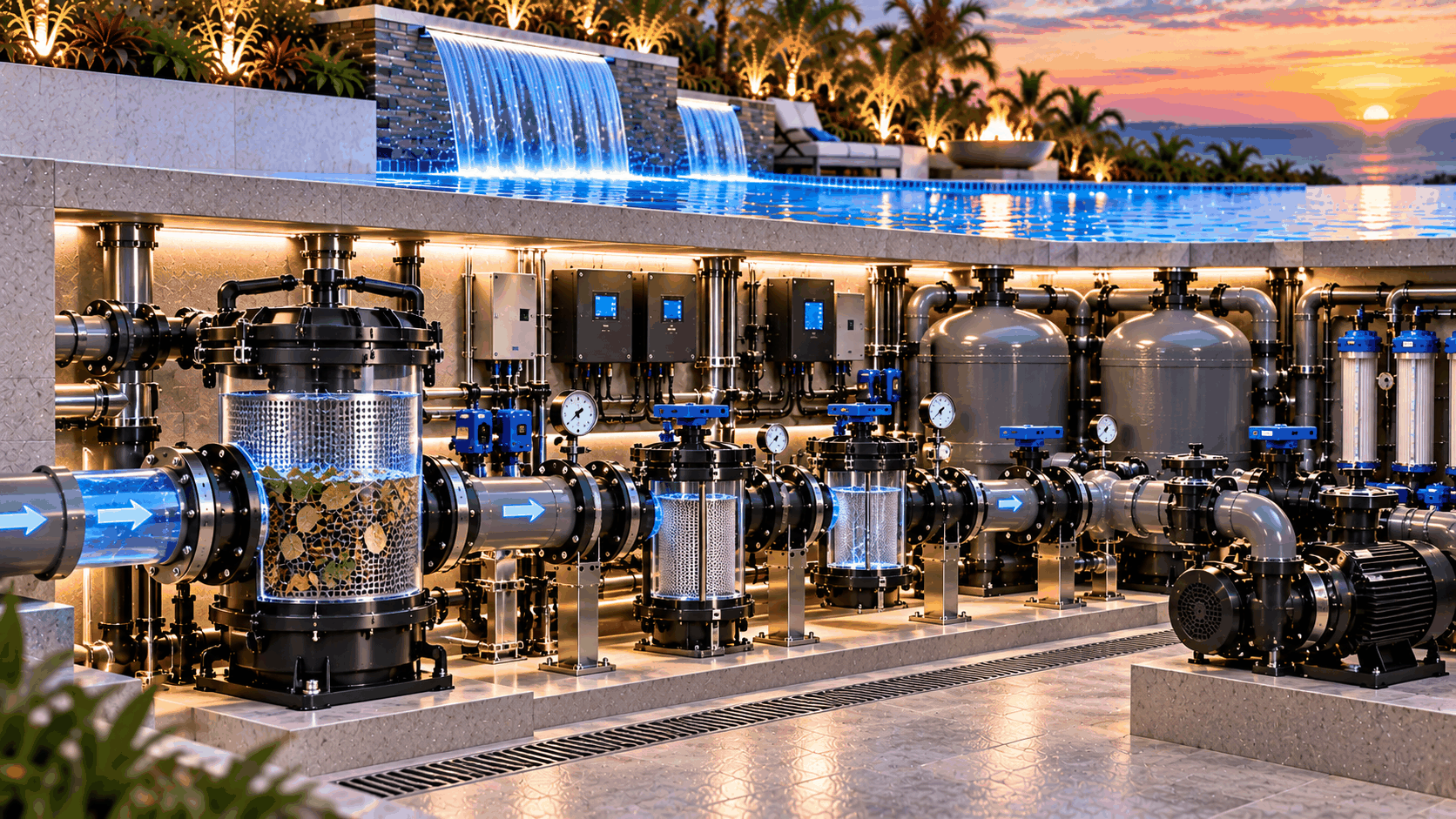
Pre-Filtration & Debris Management
Remove More Before It Reaches the Filter.
The most effective filtration strategy begins before water reaches the primary filtration vessel.
Leaves. Hair. Organic material. Fine debris. Environmental contaminants.
White Water evaluates upstream debris management and pre-filtration as part of the complete circulation and filtration architecture—helping protect pumps, reduce filter loading, improve serviceability, and support more consistent system performance.
Better filtration begins by controlling what reaches the filter.
Pump Strainers — Protective components designed to capture larger debris before it reaches pumps and downstream equipment.
Debris Separation — Purpose-engineered separation technologies for environments exposed to significant organic or environmental debris.
Feature & Specialty Pre-Filtration — Dedicated filtration strategies for water features, fountains, interactive environments, and other specialized circuits.
Equipment Protection — System configurations designed to reduce unnecessary debris loading on pumps, filters, heat exchangers, treatment equipment, and other downstream components.
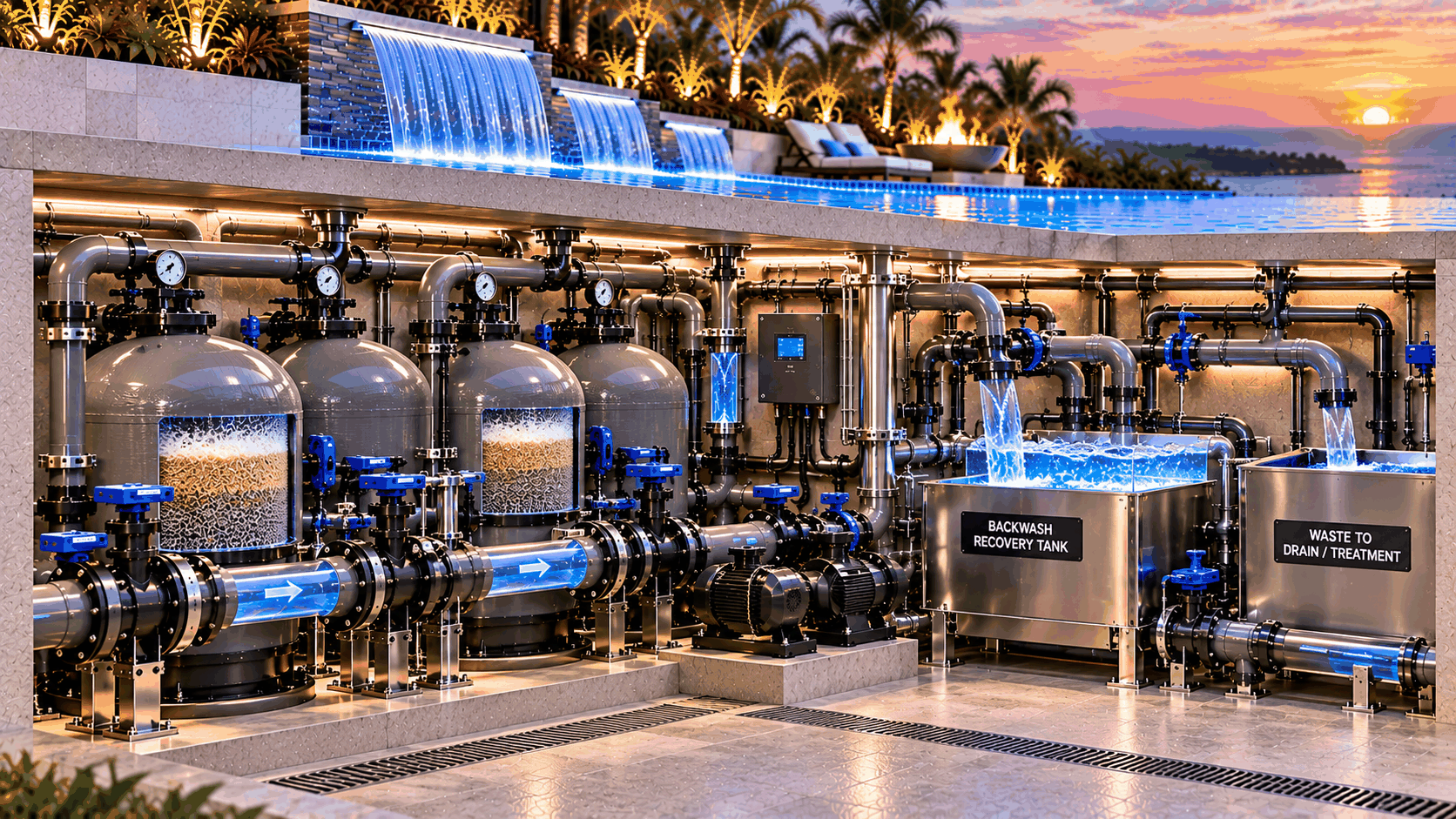
Backwash, Recovery & Waste Systems
Filtration Doesn't End at the Filter.
Media filtration systems eventually have to remove captured contaminants from the filtration system itself.
That process affects water consumption, drainage, treatment, operating cost, equipment sizing, and facility infrastructure.
White Water engineers backwash and waste-water strategies around filter requirements, available infrastructure, recovery opportunities, discharge considerations, and long-term operation.
What leaves the filter must be engineered too.
Backwash Hydraulics — Flow and piping systems engineered to provide the conditions required for effective filter cleaning.
Backwash Holding & Recovery — Storage and recovery strategies evaluated where water conservation, site conditions, or facility requirements warrant them.
Waste & Discharge Systems — Purpose-designed infrastructure supporting controlled handling of filter waste and maintenance water.
Automated Backwash Control — Control strategies capable of initiating and managing filtration cleaning based on operating requirements and system conditions.
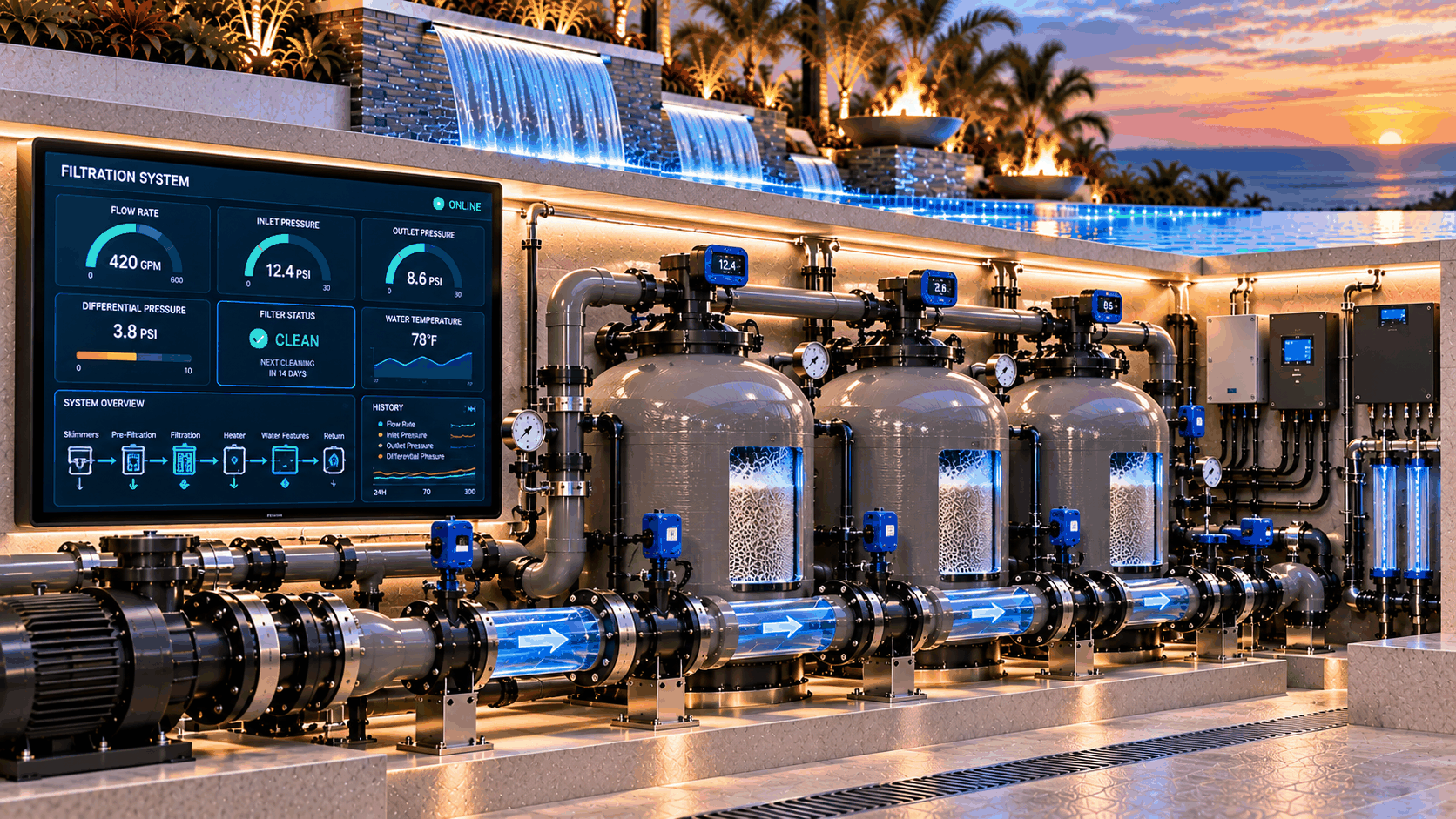
Filtration Monitoring & Intelligence
Know What the System Is Doing.
A filtration system shouldn't become a black box once the equipment starts operating.
Flow. Pressure. Differential pressure. Filter loading. Operating state. Cleaning cycles.
White Water integrates instrumentation and controls that provide visibility into filtration performance—helping operators understand when conditions change and when maintenance or intervention may be required.
Performance becomes more manageable when it becomes measurable.
Differential-Pressure Monitoring — Instrumentation used to identify increasing resistance across filtration equipment as contaminants accumulate.
Flow Measurement — Monitoring used to verify that filtration systems are operating within intended hydraulic conditions.
Automated Filter Controls — Integrated controls supporting filtration operation, cleaning sequences, alarms, and equipment coordination.
System Instrumentation — Measurement points incorporated for commissioning, troubleshooting, maintenance, and ongoing performance verification.
Engineered to Perform. Designed to Maintain.
A filtration system isn't truly well designed if maintaining it becomes unnecessarily difficult.
White Water considers filter access, vessel clearances, cartridge removal, media replacement, valve positioning, equipment isolation, drainage, service connections,
Engineered for Performance.
Designed for Service.
Equipment Isolation. Valves and system configurations allowing filtration equipment to be serviced without unnecessarily disrupting the complete aquatic system.
Maintenance Clearances. Mechanical layouts designed around actual requirements for opening, servicing, cleaning, and replacing filtration components.
Service Connections. Purpose-designed connections supporting draining, cleaning, flushing, testing, and maintenance.
Commissioning & Testing Points. Strategically incorporated instrumentation and access points supporting system verification and troubleshooting.
Because filtration performance isn't measured only on opening day.
It is measured across the life of the aquatic environment.
One Discipline. Two Distinct Environments.
Engineered Around How the Water Will Be Used—and What It Must Remove.
A private residential pool and a heavily used resort pool may both contain clear blue water.
What their filtration systems must accomplish can be completely different.
Water volume, bather load, operating hours, environmental exposure, turnover requirements, maintenance resources, redundancy, regulatory requirements, and lifecycle demands all influence the filtration strategy.
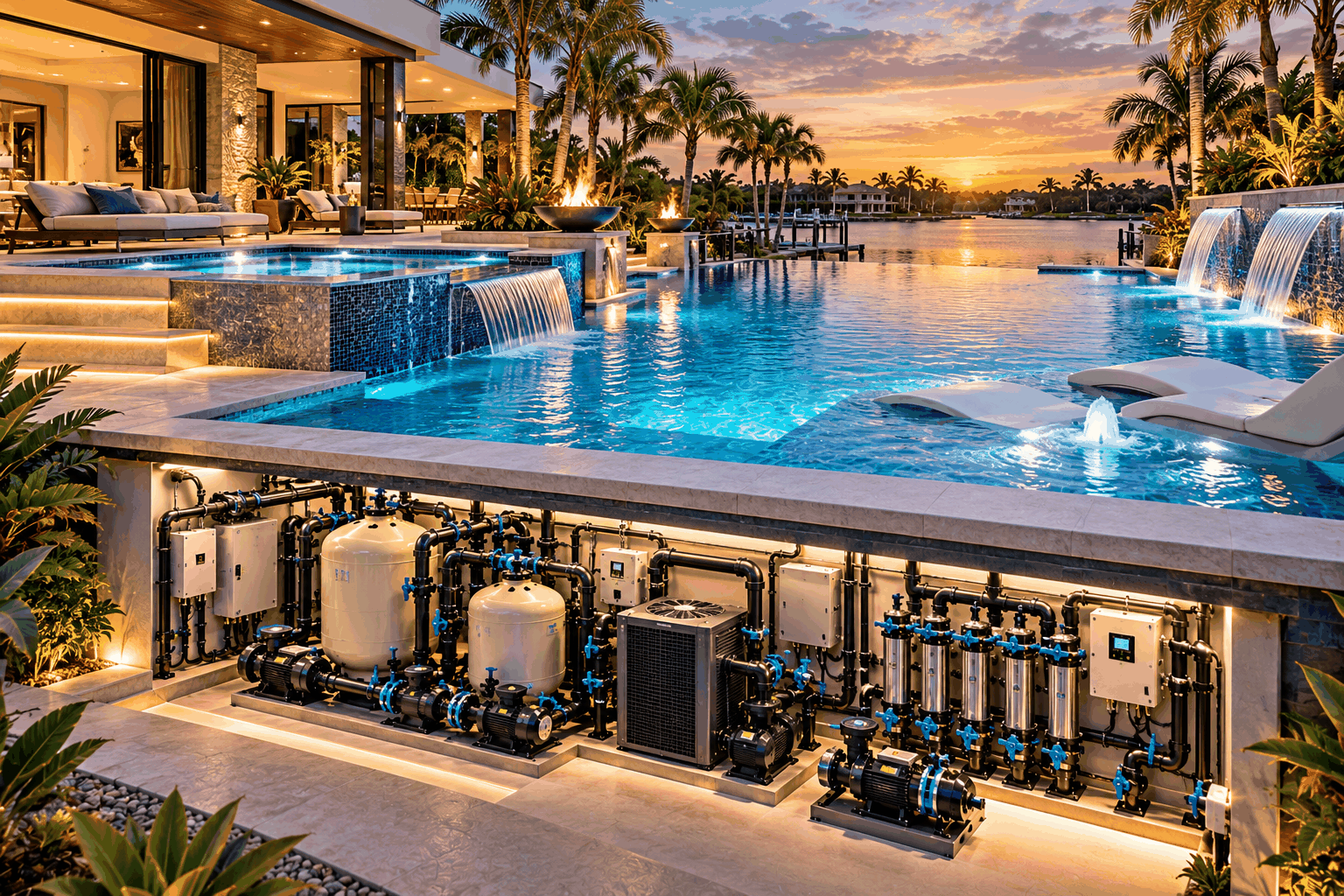
Residential Aquatic Systems
Exceptional Water Without Unnecessary Complexity.
Private pools. Spas. Cold plunges. Infinity pools. Water features. Wellness environments.
Residential filtration should deliver exceptional water quality while remaining quiet, efficient, serviceable, appropriately scaled, and integrated with the architecture of the property.
White Water engineers each filtration strategy around how the environment will actually be used—not around a predetermined equipment package.
Sophisticated water deserves filtration that is equally considered.
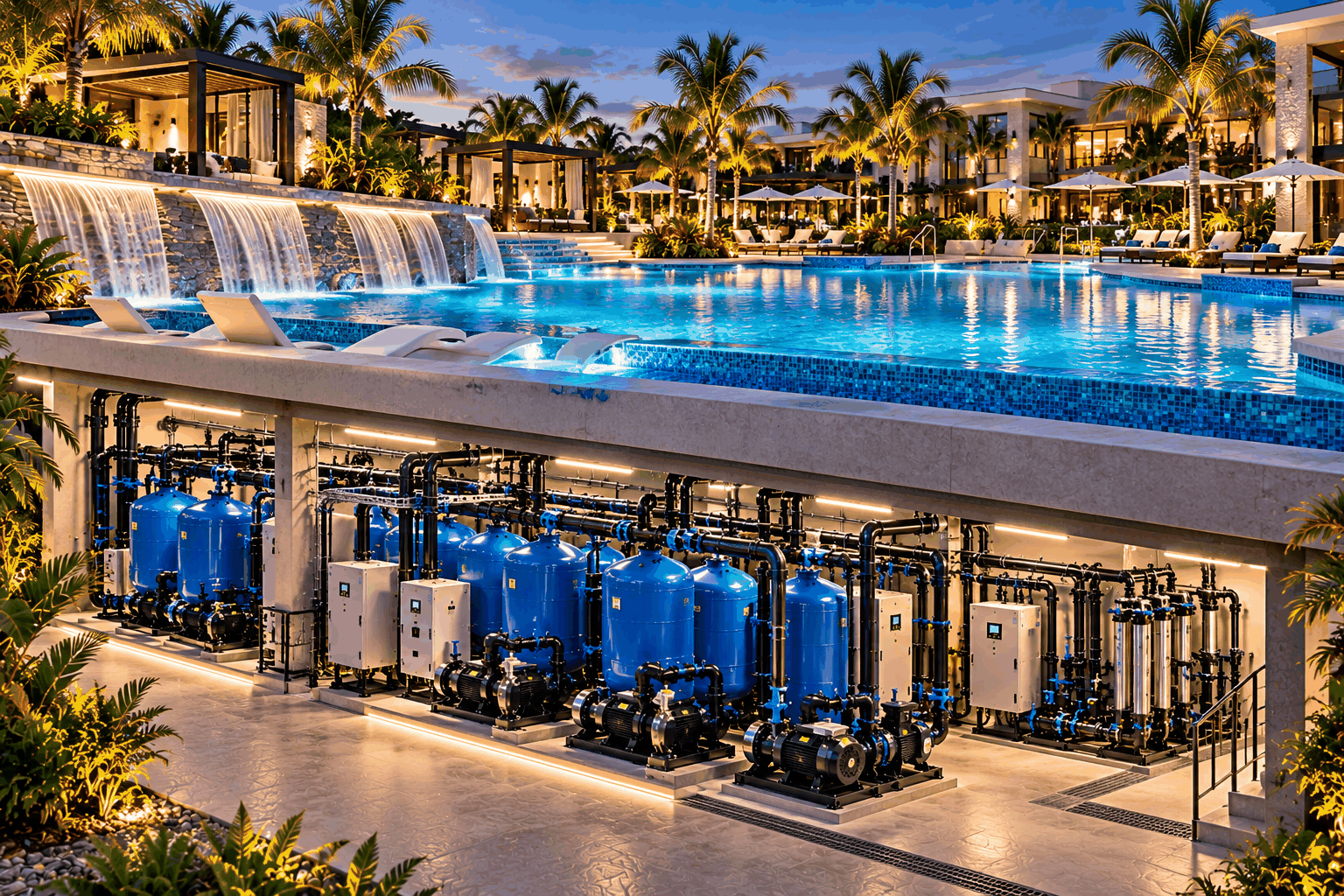
Commercial Aquatic Systems
Engineered for Load. Designed for Continuous Performance.
Resorts. Hotels. Multifamily communities. Clubs. Wellness facilities. Interactive aquatics. Destination environments.
Higher bather loads. Greater water volumes. Longer operating hours. More demanding turnover requirements. Increased contaminant loading. Greater maintenance demands.
White Water engineers commercial filtration around capacity, reliability, water quality, efficiency, redundancy, serviceability, operational labor, and lifecycle performance.
Multiple vessels. Automated controls. Differential-pressure monitoring. Flow measurement. High-efficiency technologies. Water-management strategies.
Commercial filtration isn't residential filtration made larger.
It is a different operating environment—and it should be engineered accordingly.
The environment changes.The engineering standard doesn't.
Exceptional Water Is Engineered as a System.
Installing Filtration Equipment Is One Thing. Engineering Exceptional Water Is Another.
A filter is only one component. Exceptional water depends on how the entire aquatic system works together.
For White Water, filtration is engineered around the water itself—how it moves, how it is filtered, how it is treated, and how the complete environment responds as conditions change.
A filter is only one component in a much larger aquatic system.
01
Flow Affects Filtration.
Moves the Right Amount of Water Through the System.
Flow establishes how much water reaches filtration and treatment—and directly influences circulation, turnover, efficiency, and overall system performance.
02
Filtration Affects Treatment.
Removes What Shouldn't Remain in the Water.
Proper filtration captures suspended debris and contaminants before they compromise water clarity, treatment efficiency, equipment performance, or the aquatic experience.
03
Treatment Affects Water Chemistry.
Creates and Maintains Exceptional Water Quality.
Sanitation, chemistry, oxidation, and supplemental treatment work together to control contaminants, maintain balanced water, and support a cleaner, safer aquatic environment.
04
Hydraulics Determine Effectiveness.
Delivers Conditioned Water Throughout the Environment.
Properly engineered suction, returns, piping, valves, and distribution ensure filtered and treated water reaches the complete aquatic environment with the flow and balance required.
05
Controls Determine Response.
Keeps the Complete Water System Working Together.
Automation, sensors, monitoring, and control strategies coordinate equipment operation and allow the system to respond intelligently as usage, temperature, chemistry, and operating conditions change.
Everything Is Connected.
Flow influences filtration. Filtration supports treatment. Treatment protects water quality. Hydraulics determine where that water goes. Controls coordinate how the entire system responds.
White Water engineers these components as one coordinated water-management strategy—designed around the environment, its operating demands, and the quality of water it needs to deliver.
The Equipment Doesn’t Create Exceptional Water. The System Does.
We Engineer What Keeps it Exceptional.
Exceptional filtration isn't something to select after the aquatic environment has already been designed.
Whether you're creating a private aquatic retreat, commercial pool environment, or destination-scale development, White Water engineers water quality into the project from the beginning.
Design the Experience. Engineer the Water That Makes It Possible.
Your Partner for Extraordinary Aquatic Environments.
Design-Driven Water. Engineered for Performance. Built Without Compromise.
